
High heels and blood circulation: reading time approximately 5 minutes.
Who hasn’t ever regretted choosing high heels over a good pair of comfortable sneakers to face a long day of walking?
While heels are a part of many women’s daily lives, they can also be a nightmare on long days. And a quick internet search reveals conflicting information! So how can we know if high heels and blood circulation are compatible? Should we ditch our favorite pumps in favor of flats? What heel height is safe for our legs?
Stop everything and read this article, we’ll reveal the « must-dos » and « no-ways » when it comes to high heels!
The « NO WAY »: high heels and their impact on physical health
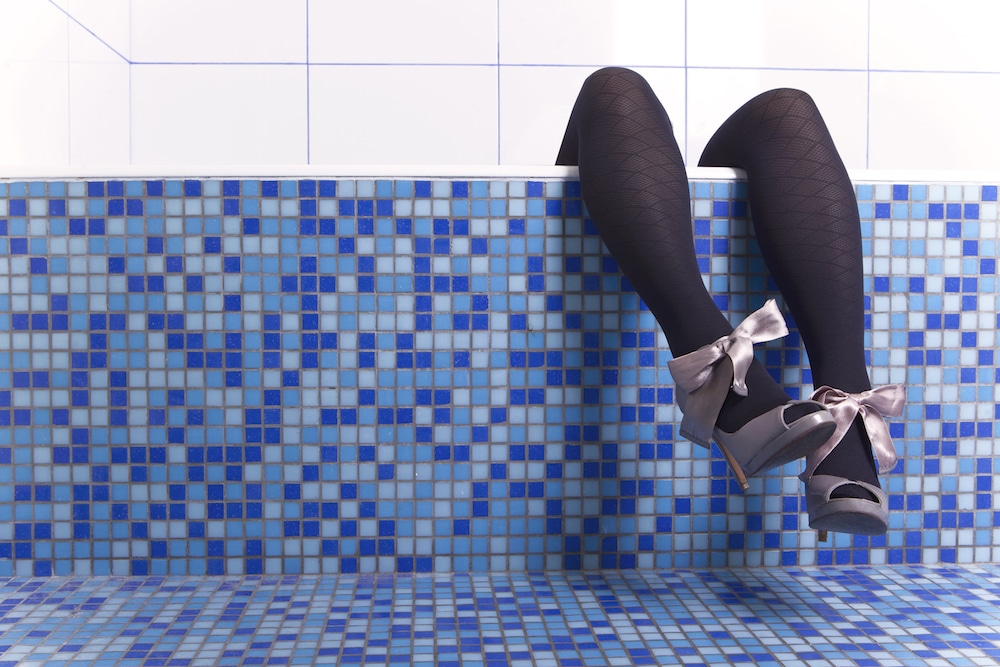
Do you know why we keep hearing that high heels are a bad idea? It’s all related to the posture that heels force us to adopt. Let us explain!
High heels and blood circulation: a matter of posture
While we may think we can perfectly tolerate high heels, it is no less true that beyond five centimeters in height, the foot becomes deformed and blood circulation is impaired.
Why does blood circulate less well when wearing high heels?
- High heels force us to change our posture
- All the weight then rests on the toes.
- The body is pushed forward against its will.
What are the resulting consequences?
The foot’s support surface is reduced, and swelling of the feet and toes is observed . The « cocktail sausage » effect of the toes should raise a red flag, as it indicates insufficient blood pressure to ensure effective venous return ! High heels and blood circulation are therefore a bad combination…
How can this problem be addressed?
To ensure that high heels and blood circulation no longer rhyme with tree trunk ankles and Hobbit feet, it is important to note the following:
- to have stable support ,
- to wear compression stockings, socks or tights to help blood circulate better.
Spoiler alert! While compression products are a real asset for relieving heavy and painful legs, they are not magic either… Always remember to go out with a more comfortable pair of shoes!
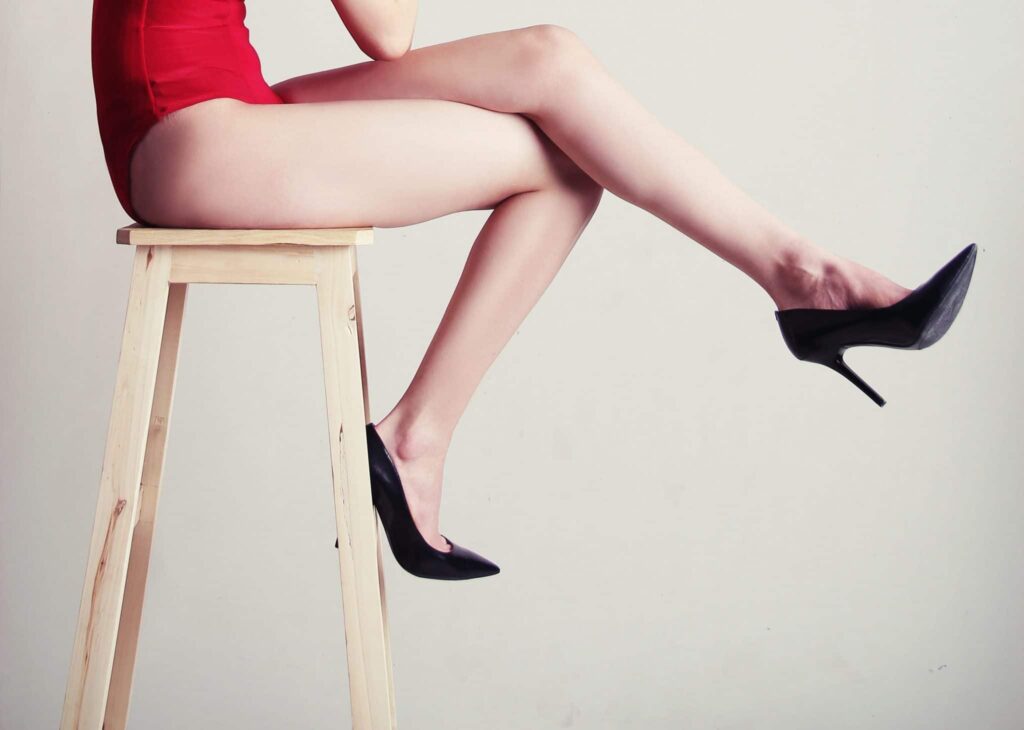
High heels and other known pathologies
Worn excessively or too high, heels can also trigger the following problems:
- The backward tilt of the pelvis (the tilting of the hips backwards)
- The shortening of the calf muscle due to its constant contraction can subsequently prevent walking barefoot.
- The excessive pressure between the kneecap and the femur, caused by the almost constant flexion of the knee
In short… Blood circulation problems, lower back or knee pain, sciatic nerve compression, or sprains… So many ailments that will ruin your life and make you regret not having brought a more comfortable pair of shoes! BUT…
There’s always a « but »! Wearing heels can also have some benefits (yes, because, well, all these ultra-pessimistic points are nice and all, but we’re not going to throw away our favorite pumps just yet… Are we?).
The essential « MUST DOs » when wearing high heels
While high heels and blood circulation don’t always have the reputation of being best friends, wearing high heels can sometimes have some benefits for our physical health . And if combined with certain good practices and common-sense rules , wearing heels can actually be quite beneficial!

Wearing heels: some benefits for physical health
As surprising as it may seem, especially after reading above about the types of pain that wearing high heels can cause, it turns out that there are some positive aspects. By wearing them sparingly, you might even find some solutions to certain problems!
Unstable kneecap and high heels
This condition, often seen in young women, can sometimes be alleviated by wearing high heels. However, moderation is key, as heel height should be kept to a maximum of 5 cm ! But when worn sparingly, heels can help the knee flex by engaging the kneecap in its groove.
Osteoarthritis and walking comfort
Osteoarthritis is a condition that can cause ankle stiffness. In this case, high heels could improve walking comfort by shifting the foot’s weight-bearing area to a less painful zone.
High heels and flat feet
Heels can be useful for anyone with flat feet , thanks to their curve which allows the sole of the foot to be arched.
In short, choose the right heel height! Neither too flat nor too high, your shoes must above all be comfortable and should not cause any pain whatsoever.
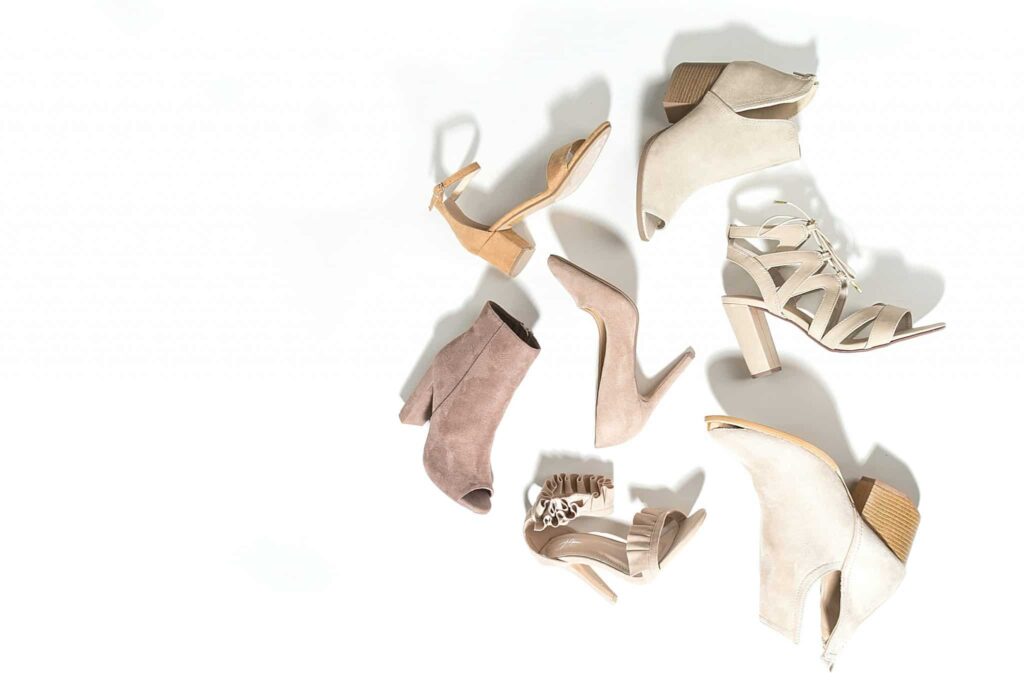
Heels and blood circulation: choosing the right shoes and knowing when to take them off
Before selecting the ideal pair, it is important to carefully follow these tips:
Heel height & shape
To ensure that the beneficial effects of heels outweigh the harmful effects, consider the following:
- alternate regularly between high heels and slightly flatter shoes.
- Opt for wedge heels , especially if you’re not used to wearing high heels.
- Opt for heels no higher than 5 cm, the ideal height to support the foot without risking a sprain or other painful accident!
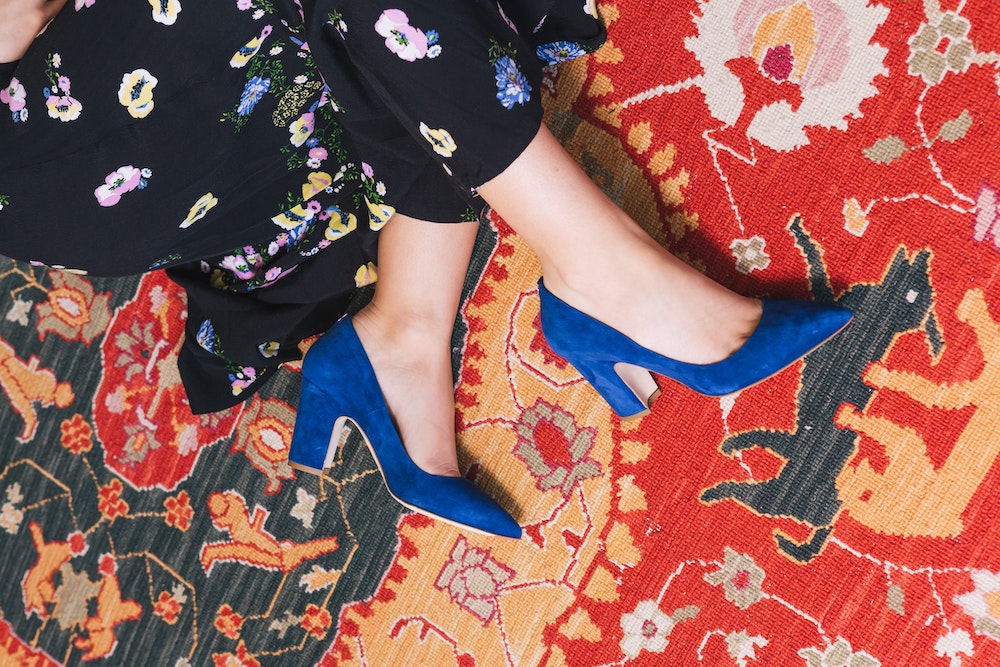
For added stability and comfort, you can also opt for a pair of shoes with square heels .
Materials & flexibility of the soles
Alternating between different platforms is not enough to alleviate all the pain, so you should also consider choosing your pair based on its composition:
- a leather insole so that the feet perfectly take the shape of the shoe (what’s more, leather absorbs odors better!).
- a flexible outsole , preferably made of rubber, to avoid injuring the foot when walking.
High heels and blood circulation: some exercises to adopt to prevent pain
If you are familiar with our magazine, you know that we often recommend useful exercises full of benefits for your legs .
For all those who regularly wear high heels, we advise you to stretch your calves using the following methods:
- Sit down and extend your legs in front of you, then pull your toes towards you.
- You can also do some standing lunge exercises: place one leg in front of the other and then bend the front leg. This helps to bend and loosen the ankle of the back leg.

Have you applied our advice and noticed a difference? Tell us about your experience in the comments 🙂